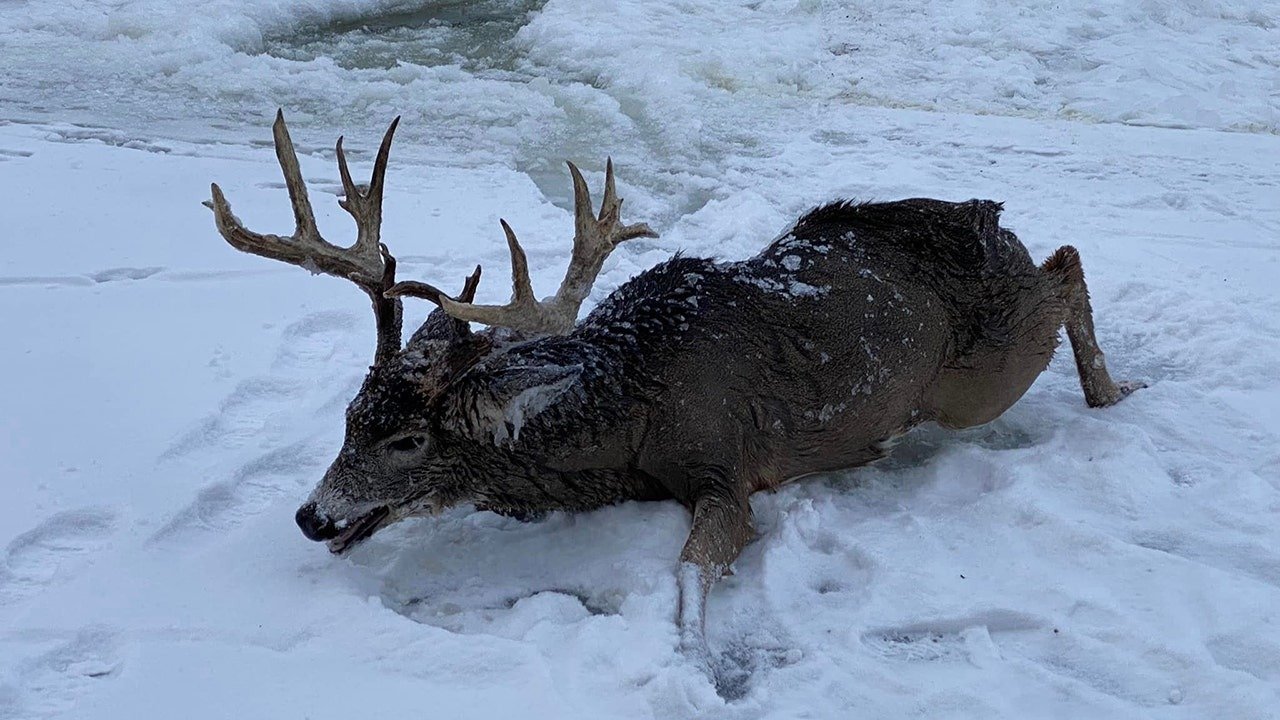
Old man Allan Rogers slowly prepared for bed, enjoying the rare feeling of comfort. Clouds were gathering outside, and weather forecasters were already warning Berkshire residents of a severe snowstorm.
Before going to bed, Allan glanced out the window and noticed something dark in the bushes. At first, he thought it was a squirrel or a stray animal seeking shelter from the approaching cold. But then the doorbell rang.
A neighbor girl stood on the threshold, shivering.
“Mr. Rogers, there’s some animal in your yard. It’s been there all morning and seems to be freezing,” she said anxiously.
Allan thanked the child and, with a heavy sigh, began to get dressed.
Slowly picking his way through the snow, he spotted a small brown creature near the fence. At first, Allan thought it was a dog, but as he got closer, he realized it was a fawn. The fawn lay motionless, almost buried in snow.
Allan froze. He understood perfectly well how dangerous a mother deer or an adult stag could be if they were nearby. Any attempt to help could end in injury. But he also couldn’t leave the fawn to die in the cold.
Returning to the house, the man began searching online for information. All the advice boiled down to one thing: don’t touch the wild animal and call emergency services. However, due to the snowstorm, the rescuers refused to leave until morning.
Gathering his courage, he picked up a hammer and headed for the fence. Carefully, trying not to frighten the animal, Allan began to dismantle the wooden planks. After a few minutes, the fawn was free, but it no longer had the strength to rise.
Then Allan came up with another solution. He fetched some carrots from the kitchen and began laying a path of food scraps to the barn, where it could find shelter from the wind.
At first, the fawn didn’t respond. But after several long minutes, he cautiously reached for the first morsel.
When the fawn finally reached the barn, Allan quickly closed the door, protecting it from the snowstorm. But the joy was short-lived—the animal was barely breathing and barely conscious.
Fearing he was losing it, Allan covered the baby with a blanket and carried it into the house. However, the animal’s condition was getting worse.
Then the man called a veterinarian he knew.
“Take him immediately,” the doctor replied.
Despite the terrible weather, Allan carefully placed the fawn in the car and drove through the blizzard.
When the lights of the veterinary clinic came into view ahead, the man breathed a sigh of relief.
The vet immediately took the fawn for an examination. Allan could only wait. The hours dragged on agonizingly until the veterinarian finally emerged with a smile.
“You made it just in time,” he said. “Any more and we would have lost him.”
The next morning, Allan returned to the clinic. Seeing him, the fawn rose weakly and came closer. The man knelt down and gently stroked the baby’s head. The fawn nuzzled his hand, as if thanking him for saving it.
Later, together with the veterinarian, Allan arranged for the animal to be transferred to a sanctuary, where it could be properly cared for until it fully recovered.
The farewell was difficult. In a short time, the older man had become attached to the little fawn.
At that moment, he realized: sometimes even one kind attempt to save someone’s life can restore the meaning a person has long lacked.
 Discuss
More news
Discuss
More news