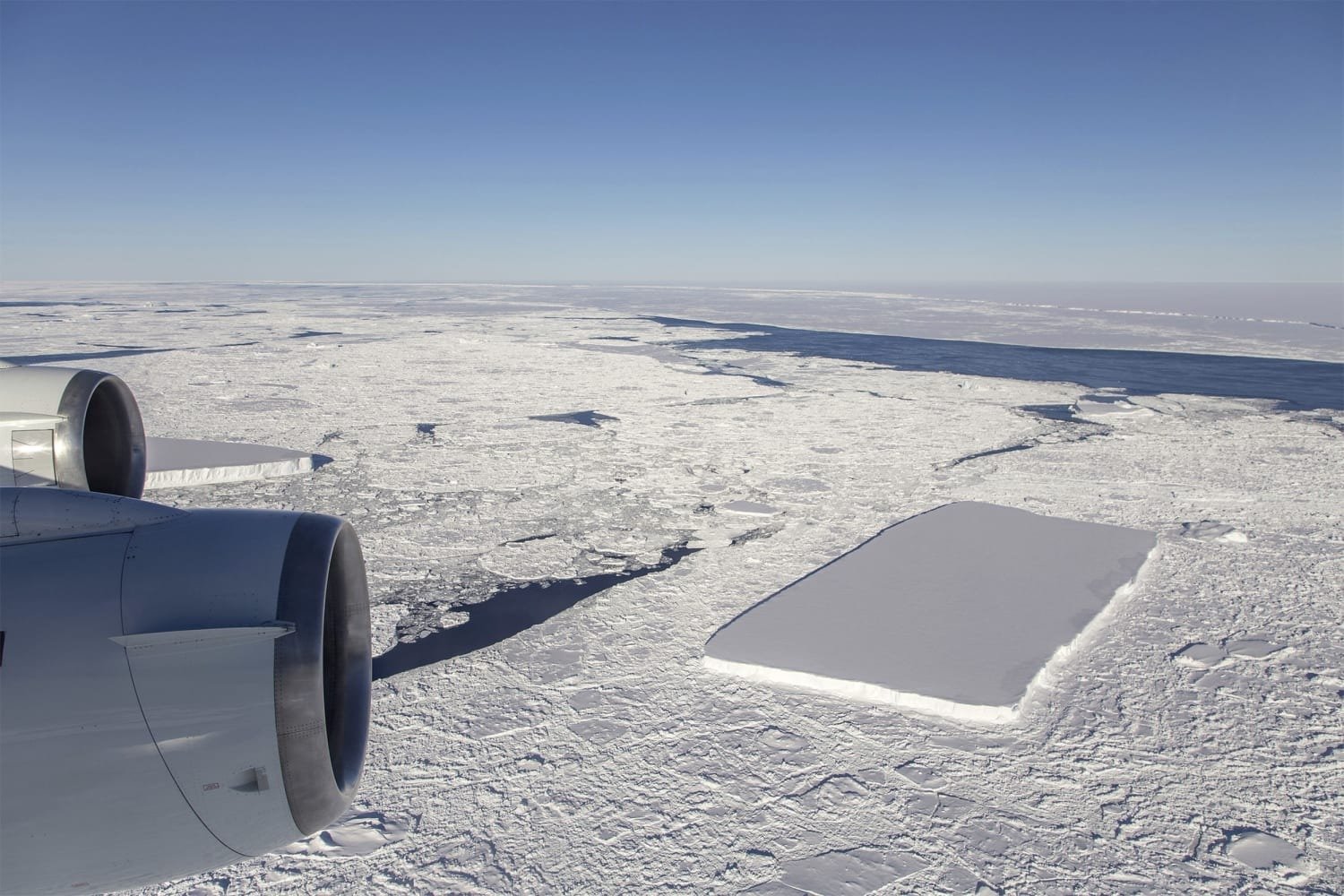
When Dr. Richard Green and his research team returned to Antarctica after a long winter, they expected to see a familiar icy landscape. But in a place where nothing had existed just months before, a gigantic rectangular ice mass towered. Its perfectly smooth lines and almost geometric symmetry stood out sharply among the chaotic snow formations.
Even before the team began their exploration, they sensed something unusual.
After drilling began, the analysis results baffled the scientists. The equipment’s readings contradicted all known data on Antarctic glaciers. The age of the ice varied from one measurement to the next, the density was inconsistent with natural norms, and the material’s structure appeared anomalous.
The deeper the exploration, the more obvious it became: this object could not have formed here naturally.
Having reached the top of the ice sheet, the researchers encountered an even stranger picture. The surface proved to be completely smooth—without the cracks, chips, or signs of erosion typical of ordinary glaciers.
During further drilling, the specialists discovered unusual air pockets. They did not appear random: the size of the bubbles, the spacing between them, and the repeating patterns resembled a well-thought-out system.
Dr. Green realized that these cavities could conceal something far more important and ordered drilling to continue to greater depths.
After several hours, the drill reached voids within the ice structure. It turned out that the mysterious air pockets were connected to enormous internal cavities.
The size of the subglacial caves stunned the team.
Such stable and large-scale spaces within an iceberg were thought to be virtually impossible.
The scientists began preparing to descend into the hidden icy world.
What the researchers saw inside the caves exceeded all expectations. Within the transparent ice were perfectly preserved animals and unknown organisms, seemingly frozen in motion. Continuing their exploration of the caves, the team discovered the remains of ancient vegetation, unusual rock formations, and complex ice layers that preserved records of Earth’s distant past.
It became clear: this was no ordinary iceberg.
Hidden beneath the ice lay an entire ancient ecosystem, isolated from the outside world for millennia.
After analyzing the findings, Dr. Green put forward a bold hypothesis. He believed the object was once a landmass that had been pushed up from the ocean floor by powerful tectonic forces.
This theory explained the presence of rocks, ancient flora, and perfectly preserved organisms.
As they prepared their materials for publication, the researchers realized they had stumbled upon an extraordinary discovery.
One mysterious ice object contained evidence of ancient climates, vanished ecosystems, and massive changes in Earth’s crust.
The expedition, which began as a routine scientific mission, unexpectedly transformed into one of the most astonishing discoveries in the history of Antarctica—and perhaps the entire planet.
 Discuss
More news
Discuss
More news