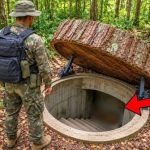
At first, it looked like an ordinary box, half-buried in snow near a deserted service road. Under the yellow light of the streetlamps, the snow slowly fell, and nothing about the scene seemed dangerous. The man was about to move on when he heard a barely audible electronic beep. A thin, intermittent sound emanated from beneath the layer of ice.
Curiosity overcame caution. He brushed the snow off the lid and noticed a worn symbol—three curved petals around a dot. The symbol seemed unfamiliar, so it didn’t immediately raise an alarm. There was no address or shipping markings on the box—only rust, dents, and small holes near the lock. He assumed someone had accidentally misplaced the package and, instead of leaving the find behind, took it home.
Once in the garage, under the lamp’s bright light, the box looked much more alarming. He had to pry the lock open with a screwdriver. Inside was another container—a smooth metal cylinder, unscratched and unworn. It bore the same symbol, only now there was no doubt.
It was a radiation hazard symbol.
The man immediately called emergency services and uttered a phrase that abruptly changed the conversation:
“I found a metal container with a radiation sign.”
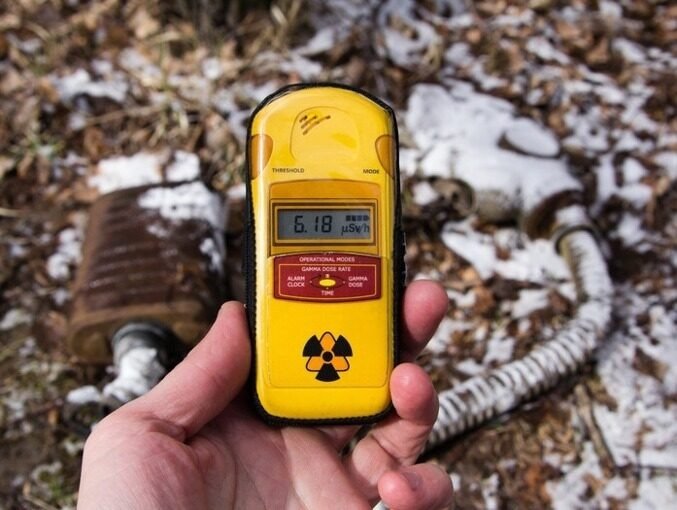
There were no sirens or ordinary police cars. Instead, specialists in protective suits and unmarked vehicles arrived. One of them entered the garage holding a device. At first, the dosimeter clicked slowly, then faster. The technician immediately stopped and ordered no one to approach.
Using long grapples, they placed the find into a heavy lead container. Everything proceeded calmly and without panic, but the atmosphere grew increasingly tense. One of the specialists quietly said:
“This didn’t end up here by accident. The container was part of a shipment.”
It became clear: the cargo had either been lost or deliberately discarded.
During the shipment, something even more alarming happened. The instrument readings began to rise too rapidly. This shouldn’t happen with proper shielding. The vehicle was stopped, and a request was made for an additional team with enhanced containment equipment.
Then a term was uttered that all hazardous materials specialists dread:
“orphaned radioactive source.”
This is the term for radioactive materials that have escaped control and accounting systems.
Later, the container was transported to a special isolation facility. All manipulations were performed remotely using cameras and robotic instruments. It turned out that the internal shielding was damaged. Not enough to cause a catastrophe, but enough to cause a dangerous increase in radiation during movement.
John later learned that such sources are used in medicine and industry. As long as they are properly protected, there is no threat. But lost or damaged devices can lead to serious accidents and contamination.
Danger doesn’t always look scary.
It doesn’t glow or make loud sounds.
Sometimes it’s just a forgotten box on the side of the road. And if he hadn’t stopped then and called the specialists, no one would have known how close everything was to disaster.
 Discuss
More news
Discuss
More news