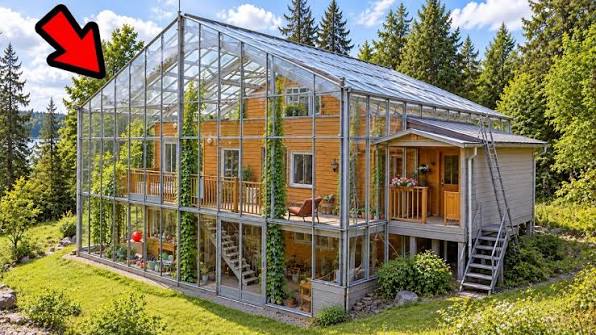
For most people in Sweden, winter means freezing temperatures, short days, and enormous heating bills. When the cold arrives, families close their windows, turn up the thermostat, and prepare for months of darkness and snow.
Charles and Marie chose a completely different approach.
Instead of fighting the Scandinavian climate, they decided to use it. Their solution sounded almost unbelievable: build a huge glass structure around their entire home.
Today, their two-story wooden house stands inside a giant transparent shell.
A House Inside a Greenhouse
From the inside, the home looks perfectly ordinary. It has comfortable rooms, warm furniture, and a typical Scandinavian interior.
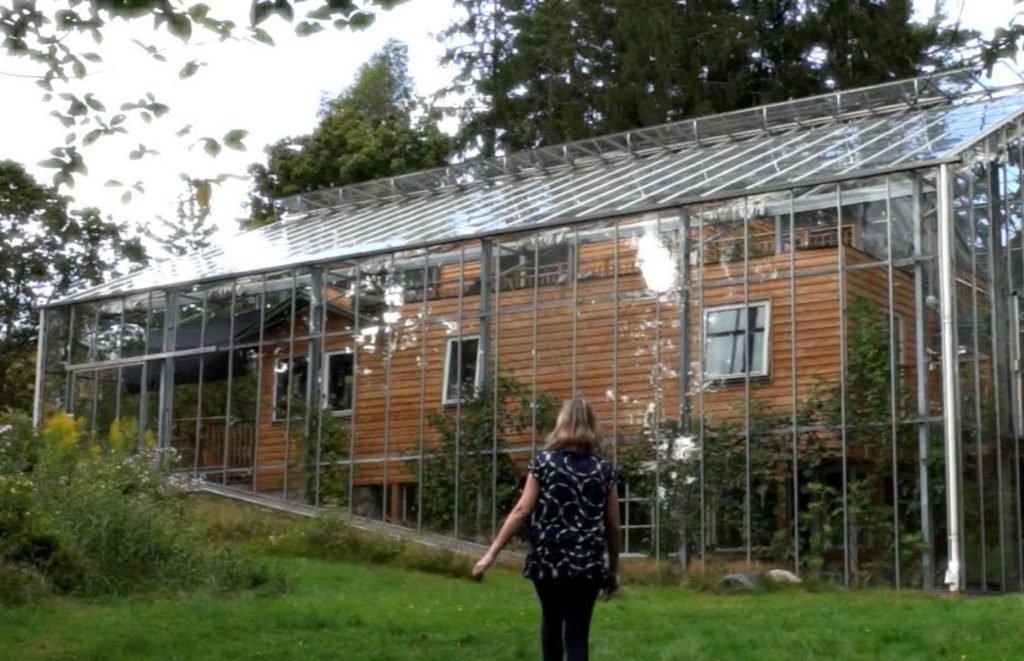
From the outside, however, it looks extraordinary. The entire building is surrounded by a large glass enclosure made from durable panels.
At first, neighbors thought it was simply an eccentric architectural project. In reality, the structure has a very practical purpose.
The principle is similar to that of a greenhouse. Sunlight passes through the glass and warms the air, ground, and surfaces around the house. After sunset, the enclosure slows down the loss of that heat.
The glass shell also protects the wooden building from snow, rain, and freezing winds.
Turning Sunlight Into Heat
Even during the Swedish winter, available sunlight can help warm the space surrounding the home.
According to the family, they need additional heating only occasionally. Instead of relying entirely on conventional heating, they allow the glass enclosure to act as a thermal buffer between the house and the freezing outdoors.
There is another financial advantage.
Because the wooden walls are protected from direct exposure to rain and snow, they experience less weather-related damage. That can mean fewer repairs, less repainting, and lower maintenance costs.
The project reportedly cost around €80,000, but the family considers it a long-term investment designed to reduce future energy and maintenance expenses.
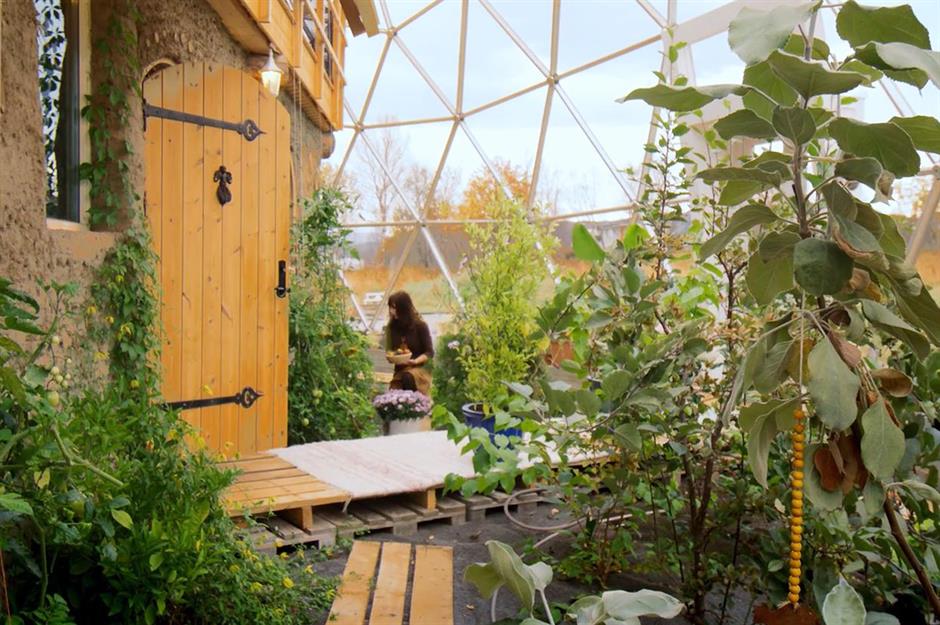
A Mediterranean Microclimate in Sweden
The most fascinating feature is the garden.
Inside the glass enclosure, temperatures can be considerably higher than outside. This creates a special microclimate where the family can grow vegetables, fruit, and other plants that would normally struggle to survive a Swedish winter.
Rainwater can also be collected and used for the garden.
During summer, the same greenhouse effect can become too strong. To prevent overheating, parts of the glass structure can be opened, allowing fresh air to circulate and excess heat to escape.
What looks like an enormous glass box from the street is actually a clever environmental system.
Charles and Marie didn’t try to defeat the Swedish winter. They created a protective layer around their home that captures sunlight, reduces exposure to harsh weather, and creates a warmer world inside.
 Discuss
More news