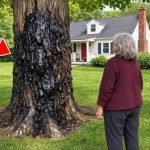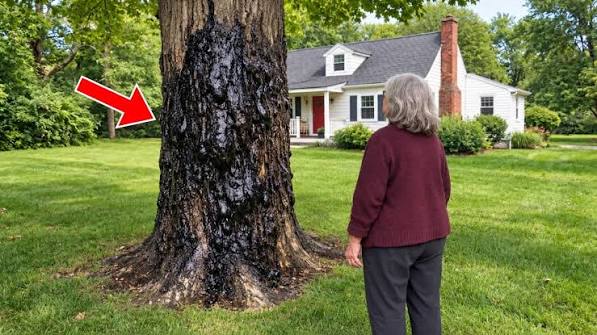
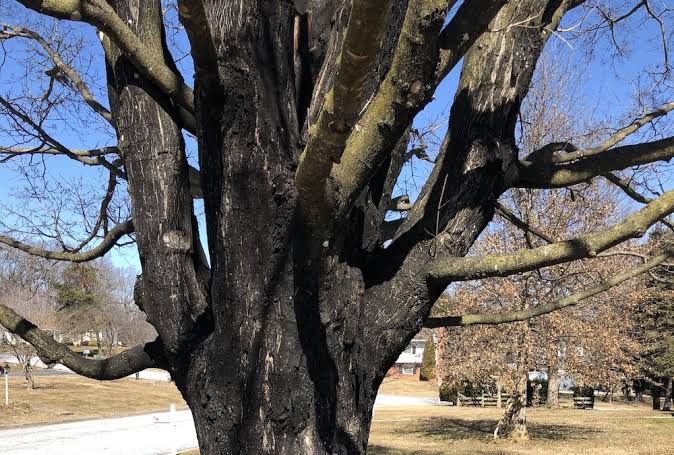
When Laura returned home after several weeks away, she immediately sensed something was wrong. The old maple tree, which had stood by her small cottage since her childhood, looked alarming. Its massive trunk was covered in thick, black streaks—as if someone had poured a bucket of paint over the bark. An unpleasant, pungent odor emanated from the tree, bearing no resemblance to the typical, pleasant scents of a summer garden.
Unable to accept the idea that her beloved tree might be dying, Laura consulted specialists. At first, they suspected a fungal infection or some other common tree disease. However, another odd detail soon caught their attention: the grass near the maple was gradually turning yellow and dying, forming a narrow strip across the lawn.
Following this strange trail, the experts were led directly to the tree’s roots. After a closer inspection, they decided to investigate what lay beneath the surface and began carefully excavating the soil.
Suddenly, one of the workers stopped in his tracks. When he caught sight of something deep within the excavation, he turned pale, dropped his tools, and recoiled sharply. He then shouted for Laura to move away immediately.
Tangled among the thick, powerful roots, they uncovered a rusted metal component connected to an unknown underground structure. It became clear that the issue was far more serious than a simple tree disease. Environmental specialists were called to the scene to determine what kind of danger had been lurking beneath the well-tended lawn.
The investigation revealed an unexpected discovery: buried beneath the maple tree was an old, long-forgotten heating fuel tank. Someone had installed it years ago and left it underground when it was no longer in use. Over time, the metal rusted, and petroleum products began to leak from the damaged container.
Toxic substances gradually contaminated the soil, damaging the root system and threatening not only the maple tree but the surrounding area as well. This leak explained the unusual black secretions on the trunk and the death of the grass nearby.
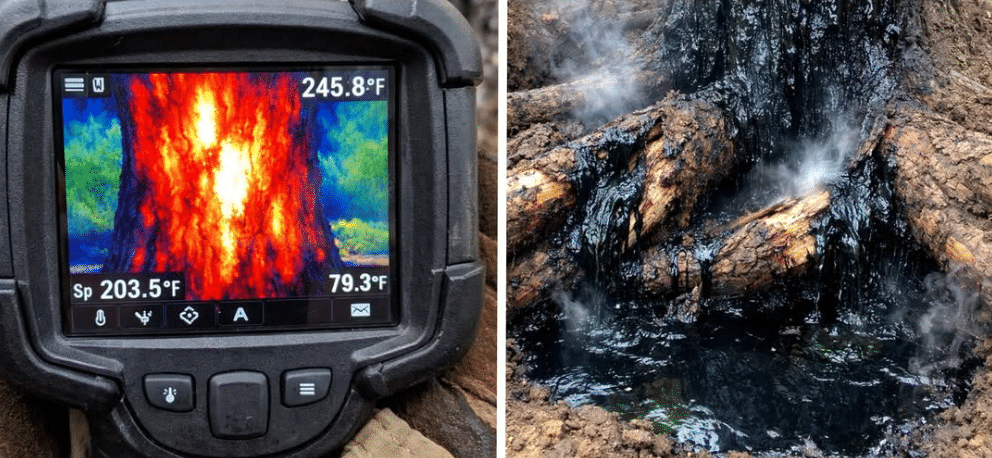
A complex operation to remediate the contamination began. Specialists extracted the old tank, removed the tainted soil, and carried out the necessary restoration work. Throughout the process, they had to exercise extreme caution to avoid damaging any roots that still showed signs of life.
Laura waited for the results with great anxiety. It seemed unlikely that the long-standing giant could ever recover from such an ordeal.
But the following spring, something happened that she had almost stopped hoping for: small green buds appeared on the upper branches, gradually unfurling into fresh leaves.
The old maple was still alive. And its story reminded Laura that sometimes the most dangerous threats hide where you least expect them—deep underground, right in your own backyard.
 Discuss
More news