For experienced cavers Mason and Caleb, a routine hike through a remote Kentucky forest was supposed to end before nightfall. But amidst the rocks, they noticed something strange: a draft of icy air wafting from a narrow fissure in the limestone.
The site appeared completely undisturbed. No signs, trails, or known cave entrances lay nearby. Yet, curiosity got the better of caution.
The men squeezed through the tight opening, expecting to find a standard underground cavity. Instead, the tunnel suddenly widened.
Before them lay a massive stone corridor.
The floor was unusually smooth, as if worn down by years of foot traffic. Traces of soot marked the ceiling. But the most incredible discovery lay ahead.
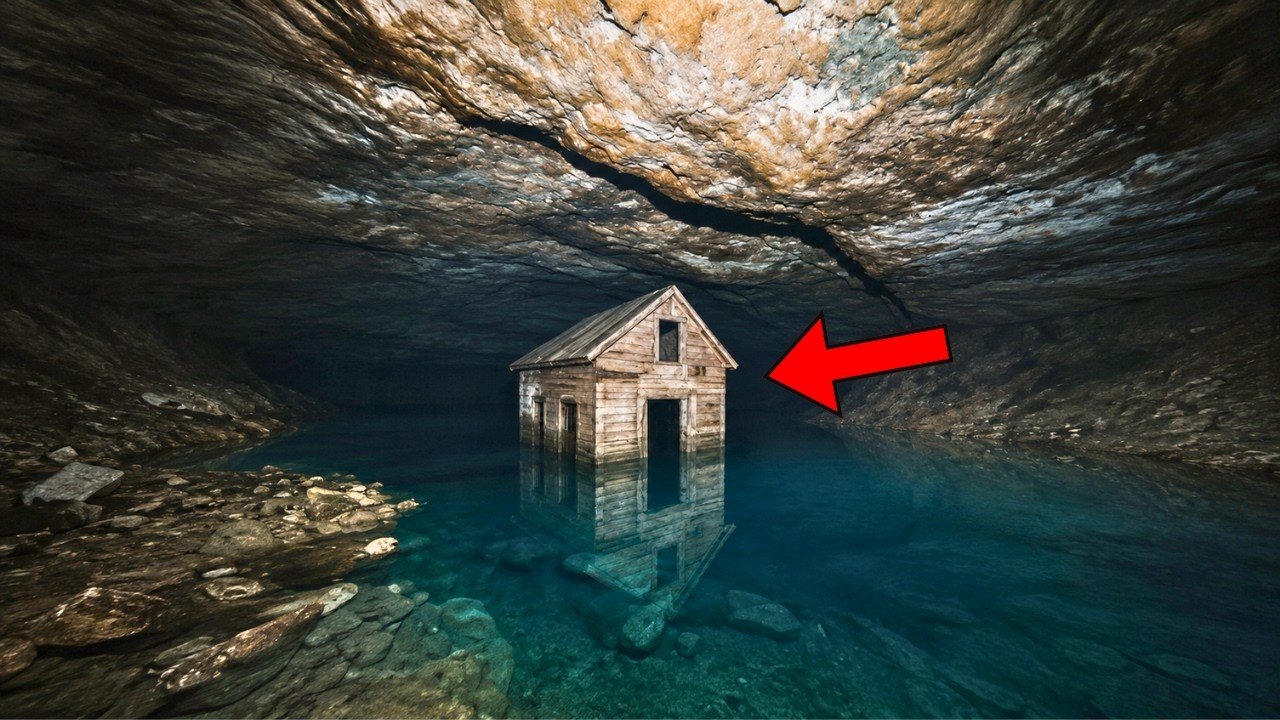
Their flashlight beams picked out a perfectly straight wall, a corner… and a doorway from the darkness.
Hundreds of feet underground, a structure clearly built by human hands stood.
And then, a cough echoed from the darkness.
Mason cautiously stepped inside and raised his camera to take a picture.
That was the moment a dry, hollow sound pierced the cave’s absolute silence.
Someone had coughed.
The sound was unmistakably human, and the men froze.
They called out to the stranger, but no one replied. Only silence—a silence that now felt even more terrifying.
While examining the walls, Mason spotted a date scratched into the limestone:
December 23, 1842.
Once back on the surface, they knew they had to investigate.
And soon, old documents helped unravel the mystery.
The mystery of the underground colony
It turned out that the site they had found was linked to the history of the famous Mammoth Cave.
In the 19th century, tuberculosis—then known as consumption—left patients with almost no hope. A local physician, Dr. John Croghan, decided to conduct an unusual experiment.
He believed that the constant temperature and unique microclimate deep underground might benefit the patients.
A small underground colony was built inside the cave for the sick. They built stone and wooden dwellings there to house people suffering from tuberculosis.
But the experiment quickly turned into a nightmare.
Patients lived for months without sunlight. Oil lamps lit the spaces, and poor ventilation filled the air with smoke and soot.
Instead of improving, many patients’ conditions only worsened.
When someone died, the body would remain near the dwellings—on a large stone ledge—for some time before being carried outside.
Today, this spot is known as “Corpse Rock.”
Mason and Caleb encountered no one else in the underground passages.
But one question remained unanswered.
What exactly had they heard in the pitch darkness?
Was it merely a strange acoustic effect created by the winding tunnels and limestone?
Or had a human voice from the past truly echoed underground after nearly two centuries?
Sometimes, the most terrifying secrets lie not where we look for them, but in places people stopped visiting long ago.
 Discuss
More news
Discuss
More news