We’re all used to saying that after death, a person takes nothing with them. But the traditions of many Roma communities view the final journey quite differently. They believe the afterlife is a continuation of the earthly life, meaning the deceased must be provided with the comforts they are accustomed to. This is why the funerals of influential Roma barons often turn into grand ceremonies, costing hundreds of thousands, sometimes millions, of dollars.
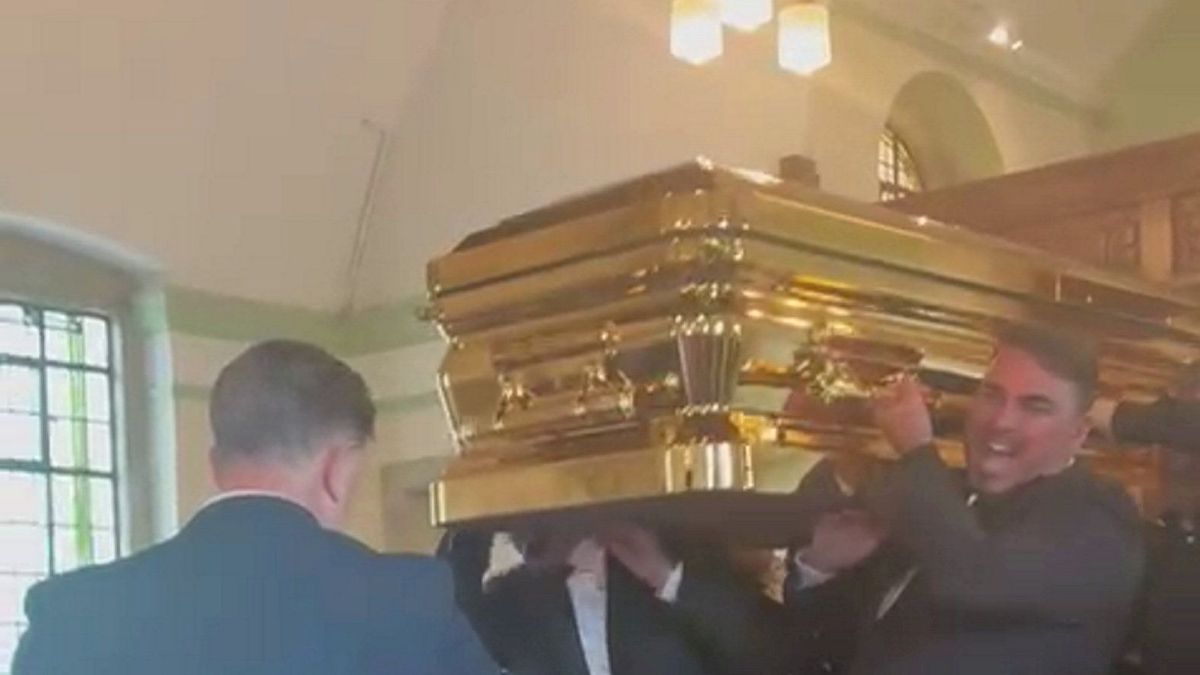
A striking example is the funeral of British entrepreneur Frank Thompson, known to his relatives as the “king of the family.” After his death at the age of 69, his family decided to organize a farewell unlike any the country had ever seen. A gold-trimmed coffin, ordered from abroad, was made for Frank, and a funeral cortege, led by a Rolls-Royce, spent several days touring the sites associated with his life. After the funeral, construction began on a massive marble tomb over the burial site, which took about a year.
However, such luxury is far from exceptional. Wealthy Roman families have a tradition of creating actual living spaces underground. These vaults can contain beds, sofas, wardrobes, televisions, refrigerators, cell phones, expensive clothing, jewelry, and even collectible alcohol. Relatives try to place everything the deceased held dear in life nearby: favorite slippers, a razor, books, photographs, and other personal items.
Sometimes, these underground structures resemble full-fledged apartments with several rooms. A separate room for the deceased’s car is considered the most prestigious. However, such expensive burials are rare and only available to the wealthiest families.
After the funeral ceremony, women often remove their gold jewelry and toss it into the grave as a final gift to the deceased. The vault is then covered with reinforced concrete slabs and filled with concrete in an attempt to protect it from burglars. But even these measures are not always effective. There are known cases of criminals breaking into newly constructed tombs, stealing money, jewelry, and expensive watches left next to the deceased.
The funeral processions themselves can be no less impressive. For some barons, exclusive coffins made of precious wood are crafted, equipped with lighting, ventilation, and other unusual features. Relatives and community representatives from dozens of countries attend the ceremony, and convoys of limousines and luxury cars stretch for many kilometers.
This was the funeral of the famous Romanian leader Florian Cioaba, who was accompanied by thousands of people and delegations from various countries. No less lavish were the farewell ceremonies for the British “Gypsy Queen” and the head of the Italian clan, Vittorio Casamonica, whose funerals were accompanied by luxurious carriages, horses, a sea of flowers, and miles-long corteges.
Particular attention is also paid to monuments. Tombstones often depict the deceased in full-length, alongside cars, horses, expensive watches, fishing tackle, bottles of fine alcohol, or other symbols of wealth and hobbies. Tables, benches, and even covered pavilions are set up near the graves so relatives can gather for memorial meals.
For most people, such funerals seem like incredible luxury. But for many Roma families, it’s more than just a display of wealth; it’s a way to show respect for a person who, in life, was the head of the family and enjoyed unquestioned authority. They believe that a dignified life should have an equally dignified continuation after death.
 Discuss
More news
Discuss
More news