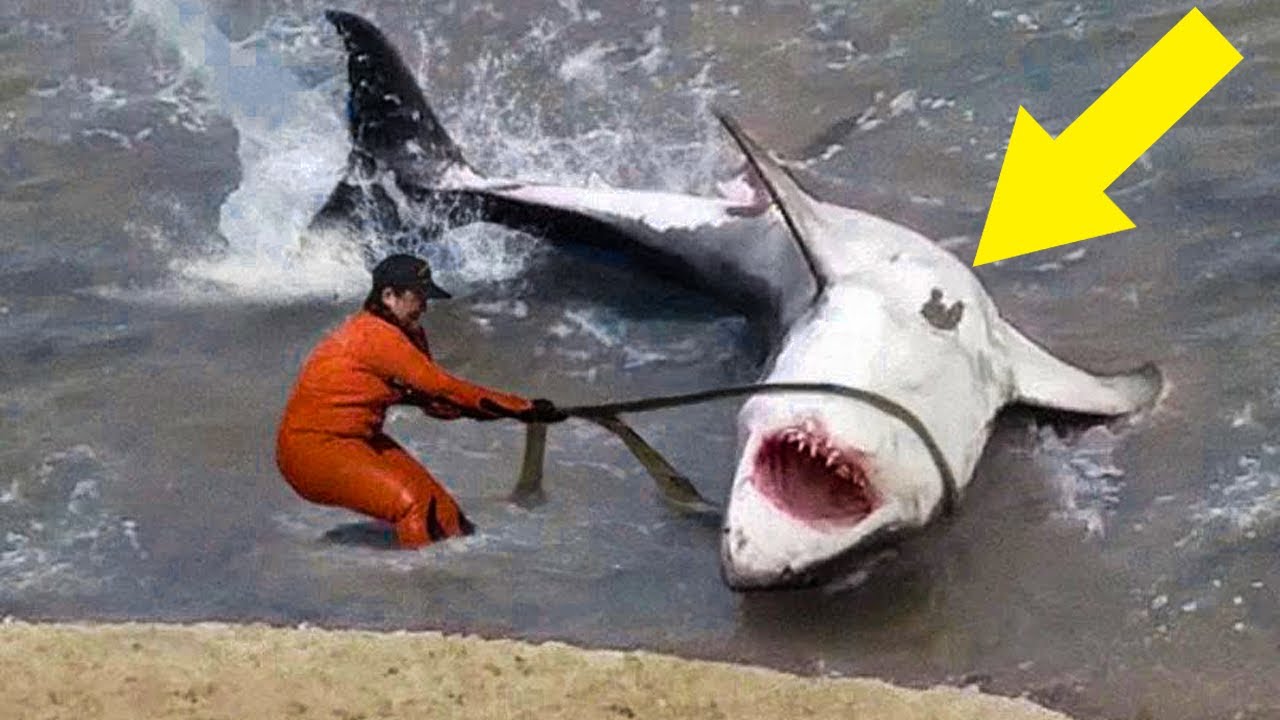
A routine outing unexpectedly turned into a story that was later discussed not only by fishermen but also by scientists. For Captain James Rogers, the day began quite normally. Early in the morning, he set out into the Atlantic Ocean, expecting his usual catch. However, within a few hours, it became clear that this fishing trip would be etched in his memory forever.
In a quarter of a century of seafaring, James had seen almost everything: enormous marlin, schools of dolphins, whales, and even large sharks. It seemed impossible to surprise the experienced captain. But around eight o’clock in the morning, the echo sounder suddenly detected something gigantic beneath the boat.
The water beneath the vessel literally came to life. A massive shadow, about six meters long, slowly moved beneath the surface. At first, the captain thought it was a young whale, but it soon became clear—a great white shark was approaching the boat.
The predator’s appearance immediately aroused alarm. Its belly was so distended that it looked completely unnatural. The fish was barely moving and appeared extremely weak.
Realizing the animal needed help, James radioed the crews of two nearby vessels. Together, they carefully held the shark near the boat while marine animal specialists rushed to the scene.
Less than an hour later, veterinarians and biologists arrived on the scene. An examination revealed a large object inside the shark’s stomach, which was interfering with its normal movement and could lead to its death. The decision was made to perform the safest procedure possible in the water.
Marine veterinarian Dr. Elena Vance led the team. While the specialists prepared their equipment, those present speculated on a variety of causes. Some believed the shark had swallowed a large turtle, while others blamed plastic debris or a metal anchor.
But the reality turned out to be far more unusual.
After several minutes of careful work, the doctors managed to extract a heavy metal cylinder, completely covered in barnacles and marine sediment. The container proved to be airtight and virtually undamaged, despite many years in the ocean.
It was later discovered that the find belonged to an oceanographic expedition that had lost its equipment in the late 1990s. Inside the cylinder were scientific data storage devices and a waterproof camera containing recordings from a long-lost underwater research mission. Scientists had been trying unsuccessfully to find these materials for over twenty years.
After retrieving the heavy object, the shark’s condition noticeably improved. It began moving significantly more actively. Biologists conducted a brief examination, fitted the animal with a special tag for further observation, and released it back into the ocean.
A few seconds later, the enormous predator disappeared into the depths as if nothing had happened.
For Captain Rogers, this day became the most extraordinary of his career. The story of a chance encounter with a giant shark and a mysterious discovery quickly spread around the world, reminding us that the ocean still holds many secrets that can surprise even the most seasoned explorers.
 Discuss
More news
Discuss
More news